Give your team a fleet of AI agents.
Your engineers already use Copilot, Cursor or Claude Code. I add the setup around it for your Rails app: specs, several agents working on separate branches in parallel, a review agent on every PR, and CI that has to pass. An engineer on your team approves every merge.
30-minute call. You leave with a plan either way.
Teams I've Worked With


The problem
Sound familiar?
AI helps, in patches
It speeds up a task here and there.
One engineer saves an afternoon on a migration. Someone else gets tests written quicker. Real wins, but the roadmap as a whole still moves at the old pace.
No time to figure it out
Your team is busy shipping.
Nobody has a spare month to work out how agents should fit into your codebase, so it stays a side experiment.
Cost
The usual fix is more engineers.
More people means more salaries, more onboarding, and more meetings. You'd rather get there with the team you have.
Quality
It all still has to work.
Faster is no use if every release comes with a fresh batch of bugs, or code nobody on the team wants to touch.
The tools are already there. The system around them is the part I build.
The fix
What a fleet of agents looks like
Several agents work on your codebase at once, each with a clear task, your conventions, and enough context to do it well. Tests and review catch problems before anything merges. An engineer decides what gets built and signs off on what ships. Rails helps here, because its conventions tell agents where code goes and how it's named and tested.
Most teams start on the left, and it's a good start. The right side is where the roadmap starts to move.
Step 1: AI as a tool
- Each engineer finds what works for them
- One task at a time
- Review fits in around everything else
- More output means hiring more people
- Access gets set up as you go
Step 2: AI as a team
- One shared setup the whole team builds on
- Several agents working in parallel
- Tests and review on every change before it merges
- More output from the team you already have
- Each agent gets only the access it needs
How it works
How I build your fleet
Map the work
We start with your roadmap and your codebase. I work out which jobs agents can take on, what they need to know, and where a person has to stay in the loop.
Set up the agents
Agents for the work that eats your team's week: features, tests, refactors, migrations, Rails upgrades. Each one gets your conventions, the right context, and one clear job.
Build in the checks
Tests, review, and CI gates catch bad output before it merges, and an engineer on your team approves every change.
Keep it safe
Agents only get the access they need, secrets stay out of prompts, and you can see what you're spending on tokens before the invoice arrives.
Then we ship real features with it, side by side with your team.
Recent work
Products and AI systems I've shipped
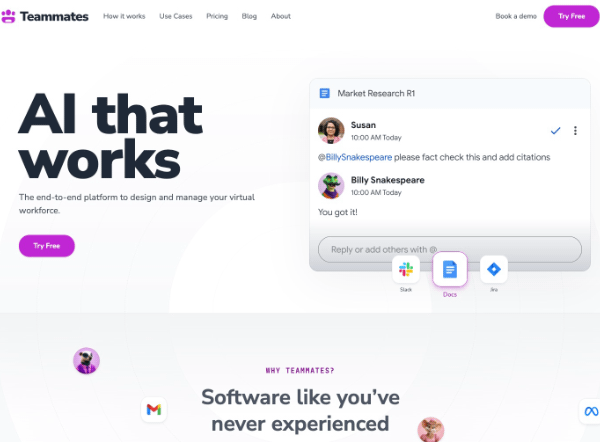
Teammates
Built the browser automation service behind an AI agent platform, a full abuse prevention system, and a credential-handling agent skill that lets agents log into third-party sites without exposing credentials to the LLM.
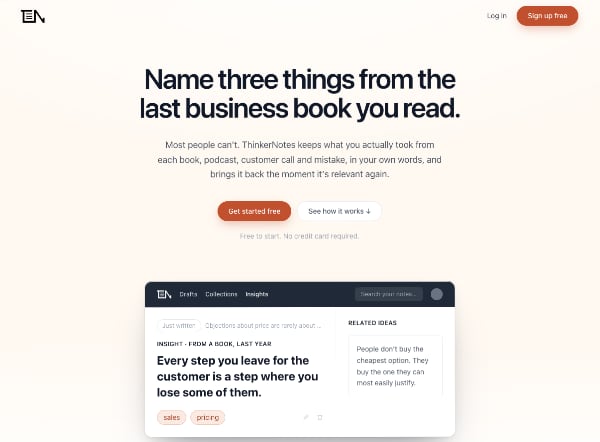
ThinkerNotes
My own AI note-taking SaaS, built and run solo. Semantic search over a personal knowledge base with embeddings and pgvector, with resilient AI integrations that never block the user.
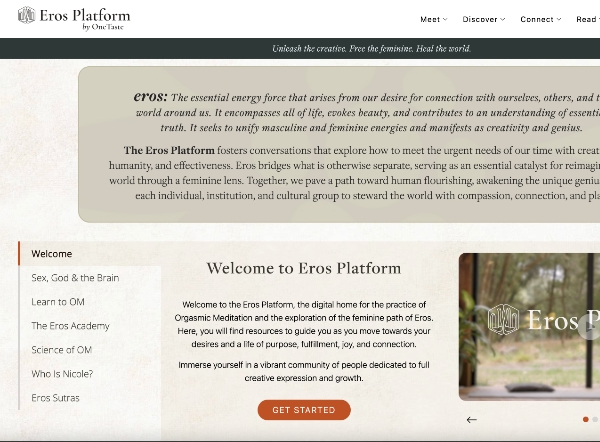
Eros Platform
AI content platform with a provider-agnostic LLM layer (OpenAI, Anthropic, Gemini, Ollama) and pgvector semantic search, built for an in-house marketing team.
Testimonials
What founders and CTOs say
As comfortable refactoring legacy systems as he is with the newest AI-driven development practices.
Cezar brings more than two decades of deep Ruby and software engineering experience, pairing hard-won technical mastery with an instinct for where the craft is headed. He’s as comfortable refactoring legacy systems as he is experimenting with the newest AI-driven development practices, and he approaches both with curiosity and rigor. Despite being 10 time zones apart, he made collaboration effortless by being flexible, always prepared, and always finding ways to make our overlapping hours count.

Incredibly quick to grasp the opportunity at hand.
I consider myself lucky to have been able to work with Cezar for the year that we did. We knew he had a deep understanding of the technical stack but we also found that he is incredibly quick to grasp the opportunity at hand, clearly articulate the pros and cons of various solutions and work with various stakeholders on a successful implementation.

I keep asking myself, 'Would Cezar approve this?'
I had the pleasure of working with Cezar over the years on multiple projects. He was always dependable, on time, and knew what had to be done without micromanagement. What I loved even more about working with Cezar was the ability to improve my coding skills while reading his code, which, to this day, is easy to read and maintain.
I actually keep asking myself on multiple occasions when writing new code, "Would Cezar approve this?"
It was a pleasure working with him, and I'm sure to reach out to him on new projects.

Working with me
Start with one week. Keep going if it's working.
You see it working on your own code before you commit to anything bigger.
One-Week Build Sprint
A working agent setup for your Rails app, proven on a real feature in 5 business days.
We pick one real feature, prototype, or stubborn problem from your backlog. I set up agents for your Rails codebase and ship it with them, tests included. Your team keeps the setup for the next feature and gets a walkthrough of how it was done.
- An agent setup for your repo: instructions, conventions, review gates
- The feature, fully tested, and ready to merge
- A walkthrough call with you and your team
- 30 days of email support
Full refund if you’re not happy with it.
If the sprint doesn’t give you what we agreed on, or it just isn’t what you hoped for, you get every dollar back. No arguments.
After the sprint
One Big Project
Fixed price
from $20,000
The project you've been putting off for a year, shipped in weeks.
- Rails upgrades, legacy rewrites, the big feature nobody wants to start
- I run the project with the fleet, so your team stays on the rest of the roadmap
- Scoped and priced up front, shipped in small, reviewed PRs
AI Engineering Lead
Part-time or full-time, month to month
from $15,000/mo
I lead your AI engineering and build with your team, so the roadmap ships without the hiring plan.
- I ship work through the fleet, side by side with your engineers
- I review PRs, so you're confident your code is top notch
- Your next hires become a choice, not a requirement
Prefer a review first?
Independent Second Opinion
I review your codebase and how your team uses agents, then tell you what's working, what's risky, and what to set up next.
- Code health, including problems introduced by AI-written code
- How your team uses agents today, and what to change
- Security, performance, and cost risks, in priority order
- A walkthrough call with you and your team
Report delivered within 5 business days.
About
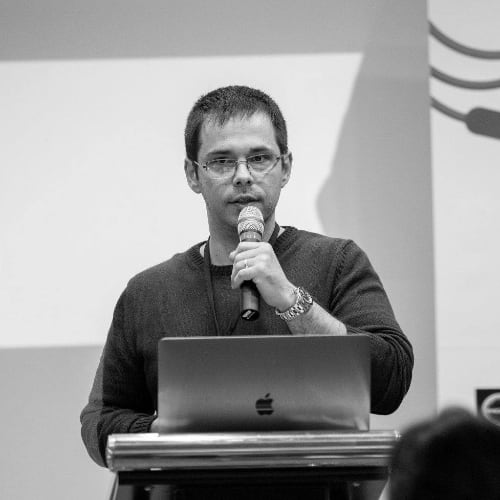
Hi, I'm Cezar
I've been shipping production software for 18 years, most of it in Ruby on Rails, including seven at RepairPal, where I grew from one of the first engineers to tech lead as the platform scaled to 3M+ monthly users.
I build with agents every day. I write the specs, set up the agents, run several at once, and review what they produce. All those years of watching codebases grow, or fall apart, are how I know what to hand to an agent and what to keep for a person.
I also build AI into products: agent platforms, RAG and semantic search, provider-agnostic LLM layers. I've trained over 160 developers, written books and courses, and I speak at conferences.
- Shipping production software since 2008, most of it Ruby on Rails
- Tech lead at RepairPal, scaled to 3M+ monthly users
- Agent platform and AI systems shipped for Teammates.work and Institute of OM
- Builds with a team of AI coding agents every day
- Trained 160+ developers, speaker at Rails Global Summit and RubyConf
- Years shipping software
- 18
- Developers trained
- 160+
- Monthly users at RepairPal
- 3M+
FAQ
Frequently asked questions
We already use AI. Why do we need this?
Most teams use AI one engineer and one prompt at a time. That helps, but it doesn't add up to much across a roadmap. Getting agents to work in parallel, on your conventions, with checks that catch bad code, takes deliberate setup. That's the part I do.
What does a fleet of agents actually mean?
Several coding agents working at the same time, each on a small, clear task, each set up with your conventions and context. The work gets broken into small jobs, handed out, and everything is reviewed before it merges.
Do we have to use a specific AI tool?
No. I work mostly in Claude Code, but the conventions and instructions go into an AGENTS.md file, which Cursor, Copilot, Codex, and most other coding agents read. The review gates run in your CI, so they don't depend on a tool either. Your team keeps using what they already like.
Isn't AI-written code full of bugs?
It can be when nobody's checking. Every change goes through tests and review before it merges, and the agents follow your conventions, so the code stays something your team is happy to own.
Will this replace our engineers?
No. Your current team stays, and gets more done. What it can replace is some of the hiring you were planning. Your engineers end up steering agents instead of typing every line, and the setup stays with them if we stop working together.
What if the sprint doesn't work out?
You get a full refund if you're not happy with it.
What happens after the sprint?
Your team keeps the setup and can run it on their own. Most teams also have one project that's been stuck on the roadmap for months, like a Rails upgrade or a messy legacy area. I can ship that with the fleet for a fixed price. And if you want someone to lead your AI engineering and build with your team, I can do that part-time, month to month.
Why Rails?
It's what I know best, with production experience going back to 2008, and it's a great fit for agents. Convention over configuration means an agent knows where things go, how they're named, and how they're tested, so it guesses less and produces code that looks like the rest of your app. If your product runs on something else, tell me what it is and I'll tell you honestly if I'm a fit.
Why not just hire someone full-time?
You can, but a senior hire usually takes two months or more to find, costs recruiting fees, and is hard to undo if it doesn't work out. I can start in days, and there's no lock-in.
Can we interview you first?
We'll talk properly on the intro call. After that, a one-week build sprint lets you see how I work on your real product before committing to anything longer. If it's not a fit, we stop there.
Do you work with US companies?
Yes. I work as a business, so you get a simple invoice, no payroll or hiring paperwork. I'm based in Romania and overlap with US mornings and all of the European workday.
Do you need access to our production data?
Usually not. I start with your code, logs, and config, and we agree up front on exactly what I and my agents can access. Happy to sign an NDA.
Let's build your fleet.
Here's what happens on our 30-minute call.
-
1
You tell me where you are
How your team uses AI today, and what's slowing the roadmap down. No prep needed.
-
2
We look at where agents fit
Which work in your codebase agents can take on, and where a person needs to stay in charge.
-
3
You leave with a plan
The first thing I'd hand to agents, whether we work together or not.
No slides, no hard sell. If I’m not the right fit, I’ll tell you.
LET’S TALK